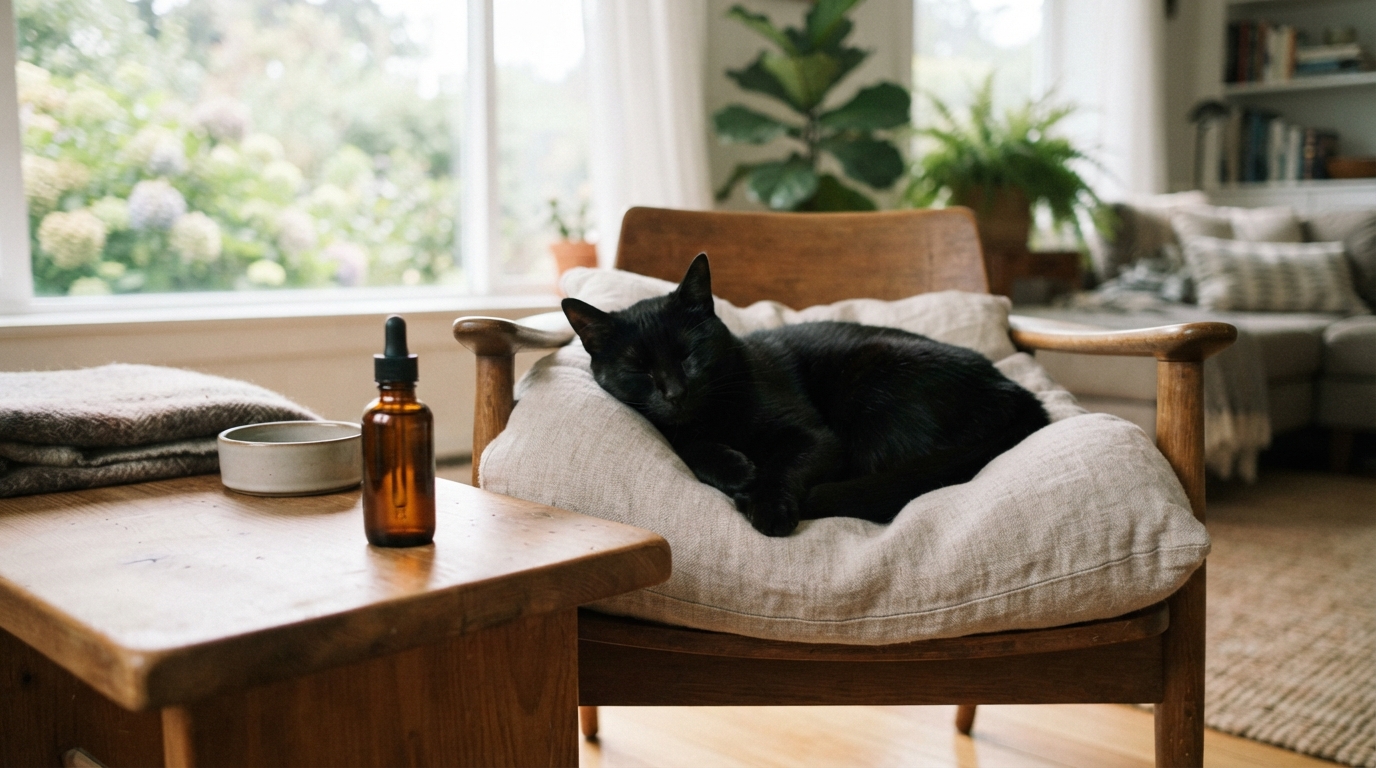
Cats have a reputation for hiding discomfort until a problem becomes difficult to ignore. A change in sleeping habits, grooming, appetite, movement, or social behavior can sometimes be the first clue that something deserves attention. As interest in pet supplements grows, Holistapet CBD Oil for Cats has become a subject of frequent discussion among owners researching options for feline wellness. Understanding cannabidiol, its potential applications, product differences, and safety considerations can help separate useful information from unsupported claims.
How CBD Fits Into Feline Health Discussions
Cannabidiol, or CBD, is a cannabinoid found naturally in cannabis and hemp plants. It does not create the same intoxicating effect associated with THC. The two compounds should not be treated as interchangeable, especially when discussing products intended for animals.
CBD interacts with biological systems involved in processes such as signaling, inflammation, and nervous system activity. Researchers have studied these interactions in humans and animals, but the amount of evidence available for cats is considerably smaller than the amount of consumer interest.
That gap matters. A biological mechanism can provide a reason for scientific investigation, but it does not automatically prove that a supplement will produce a meaningful health benefit in a household pet.
Feline metabolism changes the equation
Cats have distinctive metabolic characteristics. Their bodies handle certain compounds differently from humans and other animals, which means a product’s safety cannot be judged solely by looking at human research.
Dogs are also frequently included in CBD research, but canine data should not automatically be converted into feline dosing recommendations. Differences in metabolism, body composition, health conditions, and medication use can affect how an individual animal responds.
A veterinarian can assess these factors before a supplement is introduced. This becomes particularly relevant when the cat already takes prescription medication.
Why Owners Consider Cannabinoid Products
The reasons for exploring CBD vary from household to household. Some owners encounter products marketed for general wellness, while others search for information related to discomfort, anxiety, mobility, or age-associated changes.
These concerns are common in cats, but the underlying causes can differ greatly. A senior cat that stops jumping may have arthritis, muscle weakness, an injury, or another medical issue. A cat that suddenly hides could be experiencing pain, fear, gastrointestinal discomfort, or illness.
Symptoms should come before supplements
A useful first step is to document what has changed.
- Note when the behavior started.
- Record changes in appetite and water consumption.
- Watch whether normal jumping or climbing becomes difficult.
- Check whether litter-box habits have changed.
- Observe grooming patterns.
- Pay attention to unusual vocalization or withdrawal.
- Record any vomiting, diarrhea, coughing, or breathing changes.
This information can help a veterinarian identify patterns. It also prevents a supplement from becoming a substitute for investigating a new symptom.
Mobility deserves special attention
Older cats often become less active gradually. The change may be subtle enough that it looks like normal aging. A cat may stop climbing to a favorite shelf, sleep more, or avoid stairs.
These changes can be associated with musculoskeletal problems, including osteoarthritis. Veterinary assessment can determine whether pain management, environmental changes, weight management, or another treatment is appropriate.
CBD has been studied in connection with pain and inflammation in companion animals, but research does not establish one universally effective feline treatment plan. A product should therefore be considered only within the broader context of the cat’s health.
Product Quality Can Vary
Two bottles can carry similar CBD claims while having very different concentrations and ingredient lists. Reading the full label is therefore more useful than judging a product by its front packaging.
The amount of CBD in the entire container does not tell the owner how much CBD is present in one milliliter. That calculation requires both the total cannabinoid amount and the total liquid volume.
For example, a 300-milligram bottle containing 30 milliliters has a concentration of 10 milligrams per milliliter. The same 300 milligrams spread across 60 milliliters produces 5 milligrams per milliliter.
Information that should be easy to find
A product label should provide enough detail to answer basic questions:
- How much CBD is in the entire container?
- How much CBD is in each milliliter?
- Is THC present?
- What other ingredients are included?
- Is the product specifically intended for animals?
- What batch or lot identifies the product?
- Is laboratory testing available for that batch?
If those answers are difficult to determine, accurate dosing becomes more difficult as well.
A laboratory report can provide useful information about cannabinoid concentration and possible contaminants. It should correspond to the actual product or batch under consideration.
THC Requires Separate Attention
THC is responsible for the intoxicating effects commonly associated with marijuana. Cats can experience adverse effects after cannabis exposure, and products containing THC should not be treated as equivalent to CBD-only products.
Signs of cannabis intoxication in cats can include lethargy, impaired coordination, vomiting, drooling, changes in pupil size, urinary leakage, tremors, and changes in body temperature. More severe cases may involve seizures.
Accidental ingestion is possible when oils, gummies, baked products, plant material, or other cannabis products are left within reach. Cats can investigate objects on counters, tables, shelves, and bags.
Storage is part of prevention
A secure storage routine can reduce accidental exposure:
- Keep cannabinoid products in a closed container.
- Store them where pets cannot reach them.
- Avoid leaving droppers on counters.
- Keep products away from treats and food.
- Do not transfer oils into unlabeled containers.
- Dispose of empty packaging where animals cannot access it.
If accidental ingestion occurs, the product container should be kept available for veterinary professionals. The label can help identify the ingredients and cannabinoid concentration.
Dosing Is More Complicated Than Body Weight
Many online resources calculate supplement amounts using body weight. This approach can create a false sense of precision when evidence for a specific feline dose is limited.
A cat’s weight matters, but so do age, medical history, liver and kidney function, medication use, product concentration, and the reason for considering CBD.
There is also a practical measurement problem. Droppers do not always deliver identical volumes, and counting drops can be less precise than using a clearly marked measuring device.
Why concentration changes everything
Imagine two products that each contain 500 milligrams of CBD. One contains 50 milliliters of oil, while the other contains 100 milliliters.
The first contains 10 milligrams per milliliter. The second contains 5 milligrams per milliliter. Giving the same volume from both bottles would result in different CBD exposure.
This simple calculation demonstrates why a dosing recommendation cannot be separated from the exact formulation.
Medication Use Changes the Risk Assessment
CBD can affect enzymes involved in the metabolism of certain drugs. The practical effect depends on the specific medication and the individual animal.
A cat receiving medication for thyroid disease, seizures, pain, heart problems, infections, or another chronic condition should not be given a new cannabinoid product without veterinary guidance.
The same applies to supplements. A veterinarian should have a complete list of substances the cat receives, including occasional medications and parasite-control products.
When professional guidance is especially useful
Extra caution is appropriate when the cat:
- Takes multiple medications.
- Has liver or kidney disease.
- Has a seizure history.
- Is pregnant or nursing.
- Is recovering from surgery.
- Is very young or elderly.
- Has unexplained appetite loss.
- Has repeated vomiting or diarrhea.
These situations can involve factors that are impossible to evaluate from body weight alone.
Separating Research From Marketing
Pet CBD products are often promoted with broad claims about relaxation, pain, inflammation, appetite, or general health. Those claims should be compared with the quality of available scientific evidence.
Research involving animals has produced useful information about cannabinoid pharmacology and possible effects, but feline clinical evidence remains limited. The absence of strong evidence for a particular use does not prove that CBD has no effect. It means the effect, appropriate dose, long-term safety, or clinical usefulness has not been established well enough to make broad promises.
The FDA has not approved cannabis products for treating animals. This regulatory status is relevant when evaluating claims that a CBD product can treat or cure a medical condition.
A practical rule is simple: a product label is a source of information about the product, not proof of its medical effectiveness.
Keeping a Feline Health Record
A short health log can be useful when introducing any new supplement under veterinary guidance. Record the product concentration, amount used, date, time, appetite, activity, stool, and unusual behavior.
Changes that seem minor can become easier to interpret when written down over several days. If a reaction occurs, the record also gives the veterinarian a clearer timeline.
A supplement should not be introduced at the same time as several other new products. When multiple changes happen together, it becomes difficult to determine which one caused an improvement or adverse reaction.
Final Thoughts
CBD remains an area of ongoing research in feline care, and evidence does not support treating every cat or condition with the same approach. Careful product evaluation, attention to THC exposure, consideration of medication interactions, and veterinary guidance provide a more responsible framework for evaluating cannabinoid use in cats.
